
Stop: Ortomare Restaurant, Mano-Shinmachi, Sado
The town and village streets in Sado are a random assortment of inhabited houses and shops, vacant akiya, and blown out long strips of vacant lots. Structures are built in the machiya style, often about 4 to 6 meters wide, but extending back as far as they can in a series of interlinked one- or two-storey buildings with perhaps some open air courts in between. They tend to be built immediately adjoining/attached to neighboring houses on each side. Most on Sado may not have the charm or magnificence of a wealthy merchant’s house in Kyoto where the style reached its peak, but they can be pretty nice.
Since the houses abut each other, letting one sit and rot can be a problem for your neighbors. Rats, feral cats, jungles of weeds, and fire can all take over these houses. So, responsible owners who have the means and no intention of using the buildings tend to tear them down. Thus the long, skinny vacant lots the punctuate every block.
When the owner tears down their own house, it leaves the neighbors wall, which may not have been built to be exposed to the weather, well, exposed. It is usually up to the owner of the surviving structure to put a weather proof facade up. Sometimes they do, sometimes they don’t. Just because your neighbor can afford to demolish their house doesn’t mean you have the money to put up new cedar or corrugated steel siding. The usual result is the ubiquitous blue sheet. Some house bear blue sheet walls for years, tattering in the Japan Sea storms.
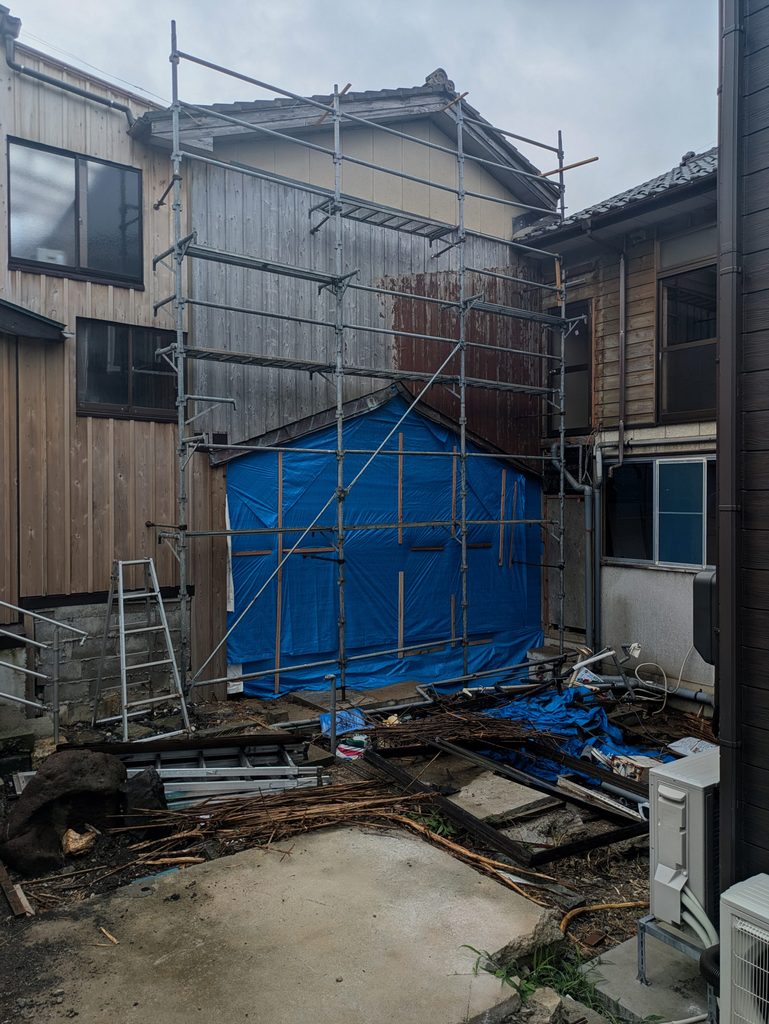
My construction site in Aikawa-Shibamachi where we removed a dilapidated exterior staircase which adjoined our neighbor’s house and temporarily got the blue sheet treatment.
Walking down the street the other day, I noticed a building on the corner was gone. I had passed this building probably hundreds of times. No idea what was there. Probably just another unremarkable two-storey akiya. But, it’s absence revealed the elegant and perfectly intact workmanship of the wall of the neighboring restaurant, a conversion from a nicer than usual for the neighborhood machiya.
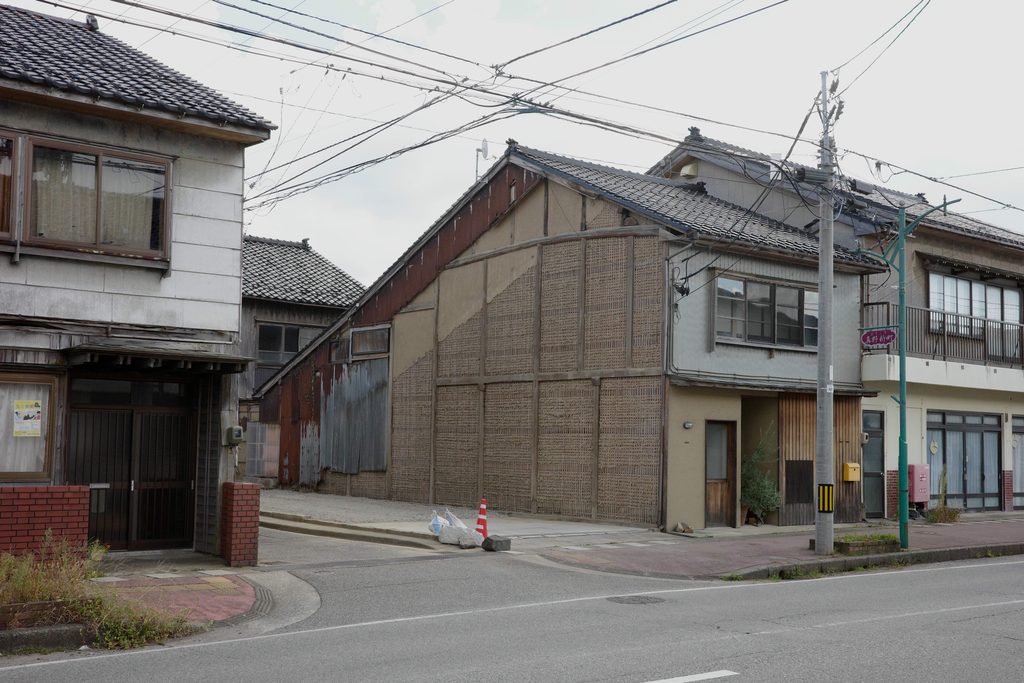
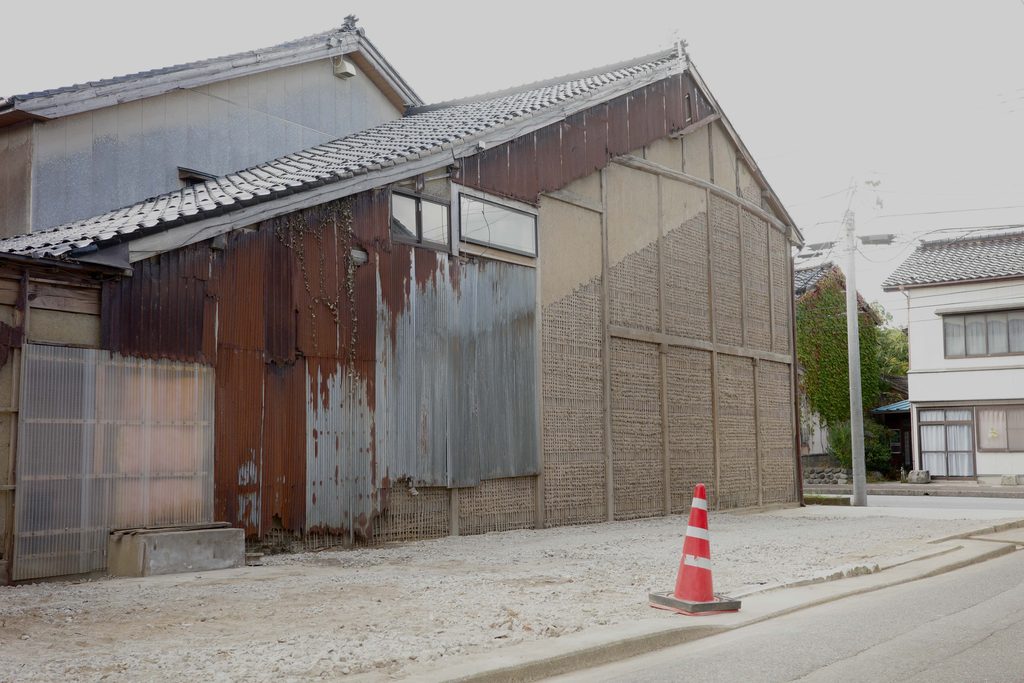
Two views of the surviving neighbor, Ortomare.
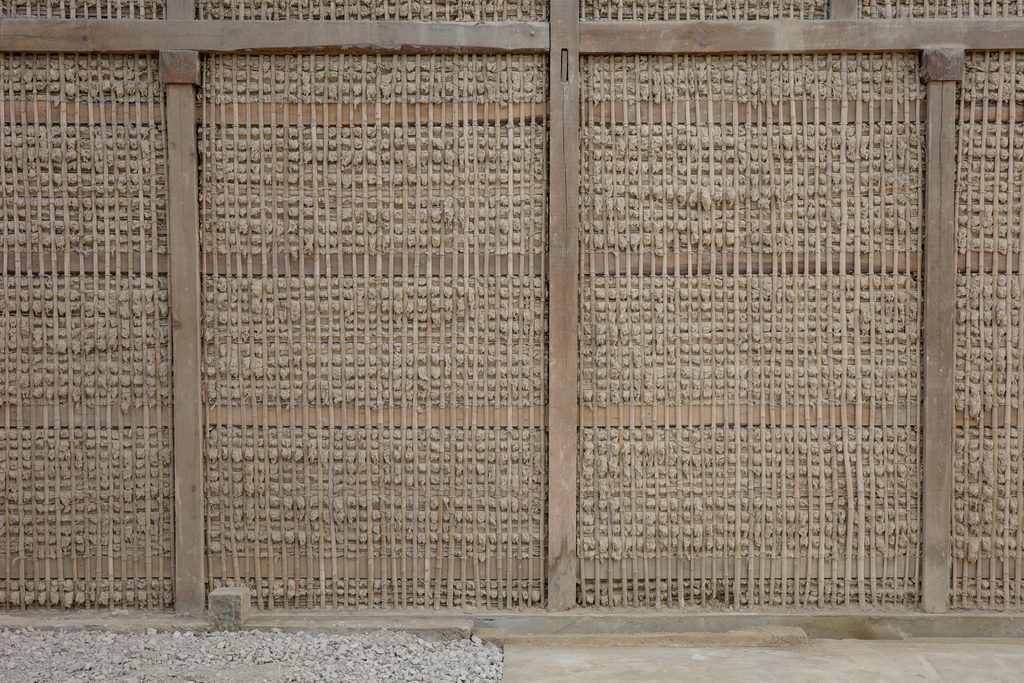
A couple of bays of typical post and beam house construction with really well-done split bamboo and earth tsuchikabe or wattle and daub.
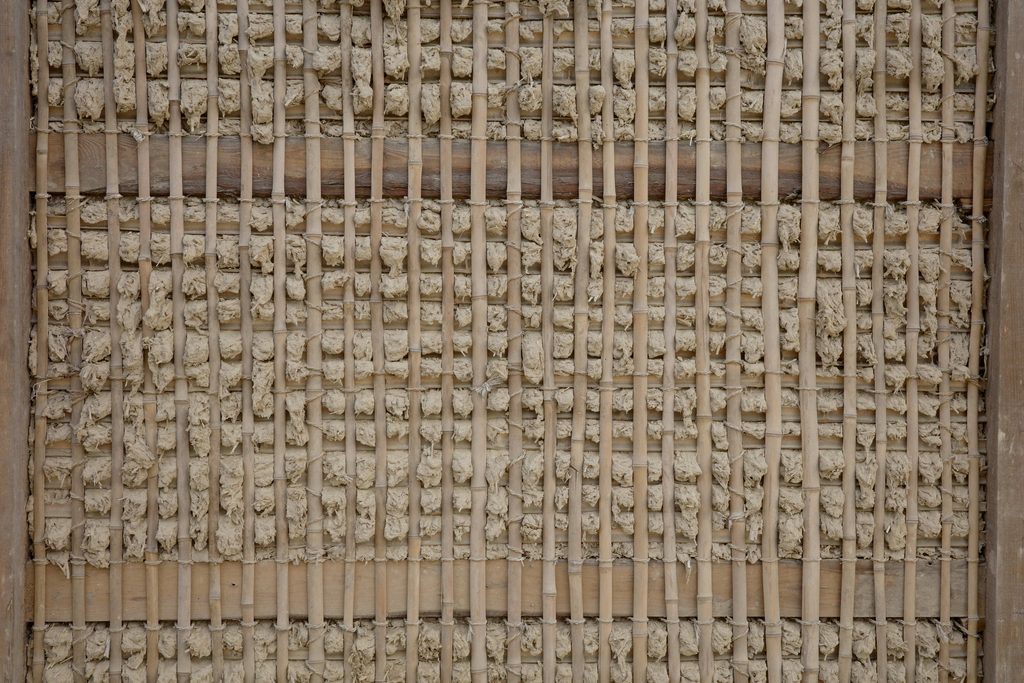
Closer up view of the same.
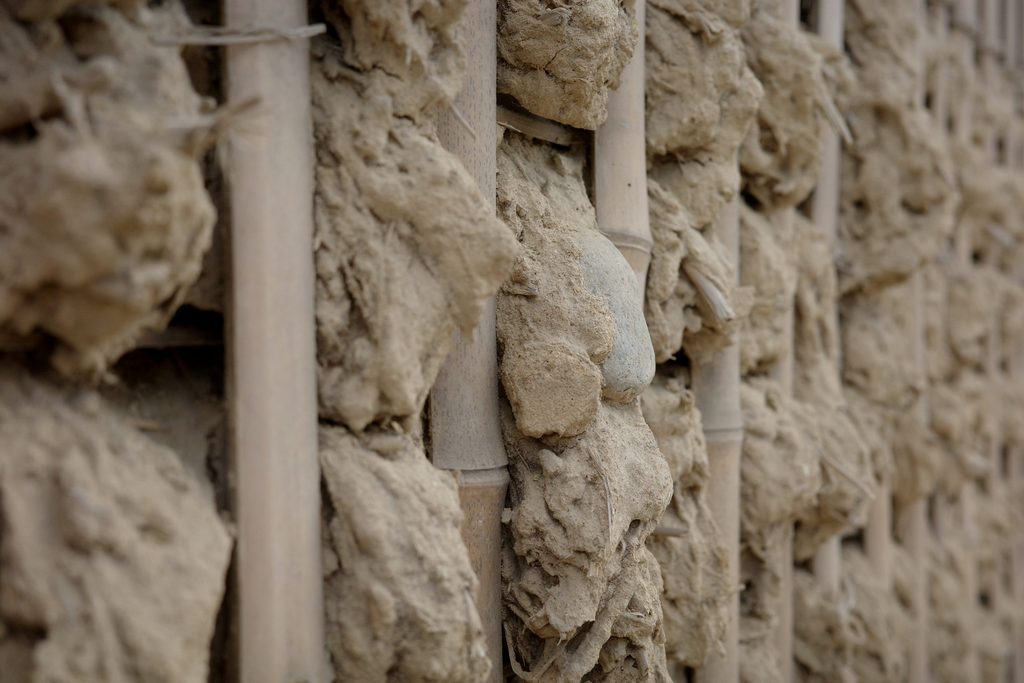
Small stone inclusion peeking out between the bamboo slats.
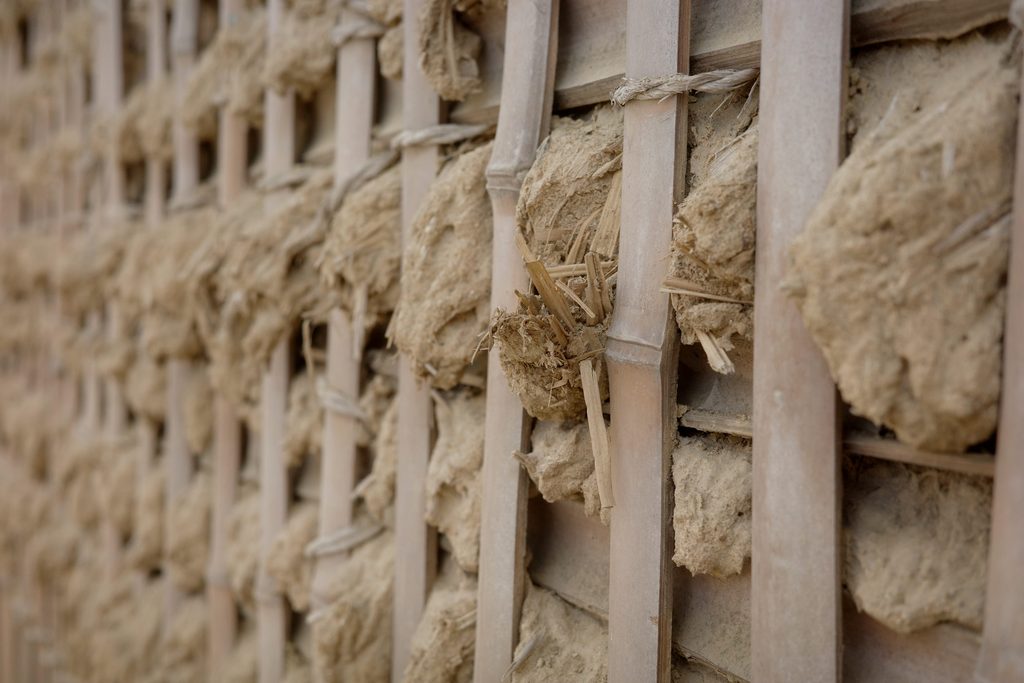
Another view of the bits of straw binder in the mud.
Even a couple of weeks later, the walls have not yet received the blue sheet. It is really so much nicer to see the varied texture of the tsuchikabe on the cutaway house. Rare chance. But, winter is coming. And before that, autumn rains and bitter winds have already begun. Not sure how much longer this will be visible. Hope the lack of plastic wrap means the owners next door are planning a really nice cladding for this. The front and interior of the restaurant show a lot of care and good taste that went into their renovation, so I hope they have something interesting in the works.